
Tools
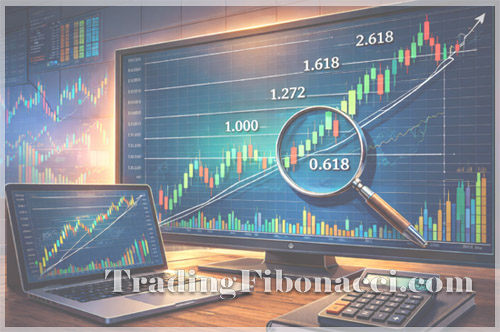
Fibonacci Time Zones
Fibonacci mathematics underlies a wide range of technical analysis tools for studying price, including Fibonacci Extensions and Fibonacci Retracements. Fibonacci Time Zones offer an alternative perspective to technical analysis, as they are based on forecasting time rather than price. More precisely, Fibonacci Time Zones are useful for anticipating the timing of potential price reversal points.
Introduction to Fibonacci Time Zones and Their Lines
Fibonacci Time Zones are designed to draw lines along the time axis, aiming to identify potential areas of price reversals. More specifically, they draw vertical lines to the right based on key swing highs or lows. These Fibonacci lines mark specific dates where significant reversals might occur, based on time. The distances between these lines start small and expand in accordance with the Fibonacci sequence.

💻 Introduction to Trading Setups
A trade setup refers to a structured methodology that includes a specific set of criteria used to identify high-probability trading opportunities. These criteria may be based on technical analysis, fundamental analysis, or a combination of both. The following article outlines the basics of trading setups and provides examples, based on the book Trade Your Way to Financial Freedom by Van Tharp.
Trading Setups and Trading Systems
Many traders mistakenly equate trading setups with complete trading systems.
Trading setups are not full trading systems; they are only one component of a broader strategy. An effective trading system includes several additional elements.
Setups play a key role in identifying optimal entry points in the market.
However, setups alone should not be the sole reason for entering a trade. Rather, they are conditions that must be met before you even consider opening a position.

How to Use the Fibonacci Extensions Tool
The Fibonacci Extensions tool is a multi-timeframe trading instrument that can be applied to any financial market. Its unique value lies in its ability to indicate precise take-profit levels when an asset breaks an all-time high (ATH) and enters price discovery.
What Can the Fibonacci Extensions Show?
While the Fibonacci Retracement identifies potential retracement levels, Fibonacci Extensions reveal how far the price may rise following a retracement. This makes them particularly effective for identifying market tops when an asset enters price discovery. However, the tool is also applicable for spotting market bottoms.
Fibonacci Extensions calculate the impulse wave in the direction of the trend. The tool can be customized to display any desired levels, but the most commonly used ones are shown in the table below.
Table: Key Fibonacci levels
|
Key Fibonacci Levels |
|
|
0.2360 |
1.0000 |
|
0.3820 |
1.6180 |
|
0.5000 |
2.6180 |
|
0.6180 |
3.6180 |
|
0.7860 |
4.2360 |

Building an Automated Forex Trading Strategy from Scratch
Today, any trader can create a sophisticated automated trading strategy, also known as an Expert Advisor (EA). This EA can trade without any human intervention on platforms such as MetaTrader 4, MetaTrader 5, TradeStation, or NinjaTrader. Below are some important facts and tips regarding the development of automated strategies.
Introduction to Automated-Strategy Building
What is an Automated Trading Strategy?
An automated trading strategy is a software-based code that integrates with a trading platform, allowing traders to automatically execute, modify, and close trading orders based on a predefined set of rules.
There are two general approaches to building an automated trading strategy:
(i) Model-based approach
(ii) Data-driven approach
The data-driven approach involves big data and requires significant hardware resources. Retail traders are advised to focus solely on model-based trading strategies, which are easier to implement.
Eight (8) Basic Automated Trading Strategies
These are some popular automated trading strategies:
(1) Trend-Following Strategies (tracking strong price trends)
(2) Breakout-Trading Strategies (initiating positions when key price breakouts are confirmed)
(3) Volatility-Expansion Strategies (targeting changes in volatility and combining results with price metrics)
(4) Mean-Reversion Strategies (based on the idea that the price of a financial asset will revert to its mean approximately 80% of the time)
(5) News-Events Automated Strategies (triggering trades based on the discrepancy between actual data and market expectations)
(6) Market Sentiment Automated Strategies
(7) Arbitrage & Statistical Arbitrage Automated Strategies
(8) Mathematical-Model-Based Strategies
Fibonacci Trading

Uncovering the hidden proportions underlying market behavior...
🎯 Explore Fibonacci trading tools and tutorials:
» Combining Fibonacci with S&R
» Combining Fibonacci with TAs
» MT4 MT5 Fibonacci Indicators
📌 Discover the Advice from Market Gurus:
📖 eBOOK: TRADING WORLD MARKETS USING PHI AND THE FIBONACCI NUMBERS {by G. Protonotarios}
A Guide to Fibonacci Trading with Insights from Elliott Waves, Gann Numbers, and Harmonic Patterns..

► ePub at Amazon | ► PDF Version
Online Forex Brokers

Compare Online Brokers for International Traders: » Compare ECN/STP Brokers
Trading Education


Forex Trading Signals

Chart Patterns
📊 Identify and Trade High-Probability Chart Patterns:
» Time Frames and Trading Styles

📈 Engaging in Global Market Trading